
Posted on: 24 July 2026
Welcome to this special edition of the Partnership update, dedicated to West Yorkshire Neighbourhood Health.
Across Bradford District and Craven, Calderdale, Kirklees, Leeds and Wakefield District, partners are building on years of strong local collaboration to bring care closer to people's homes, strengthen prevention and early intervention - and deliver more joined-up support for communities.
In this edition, you'll find:
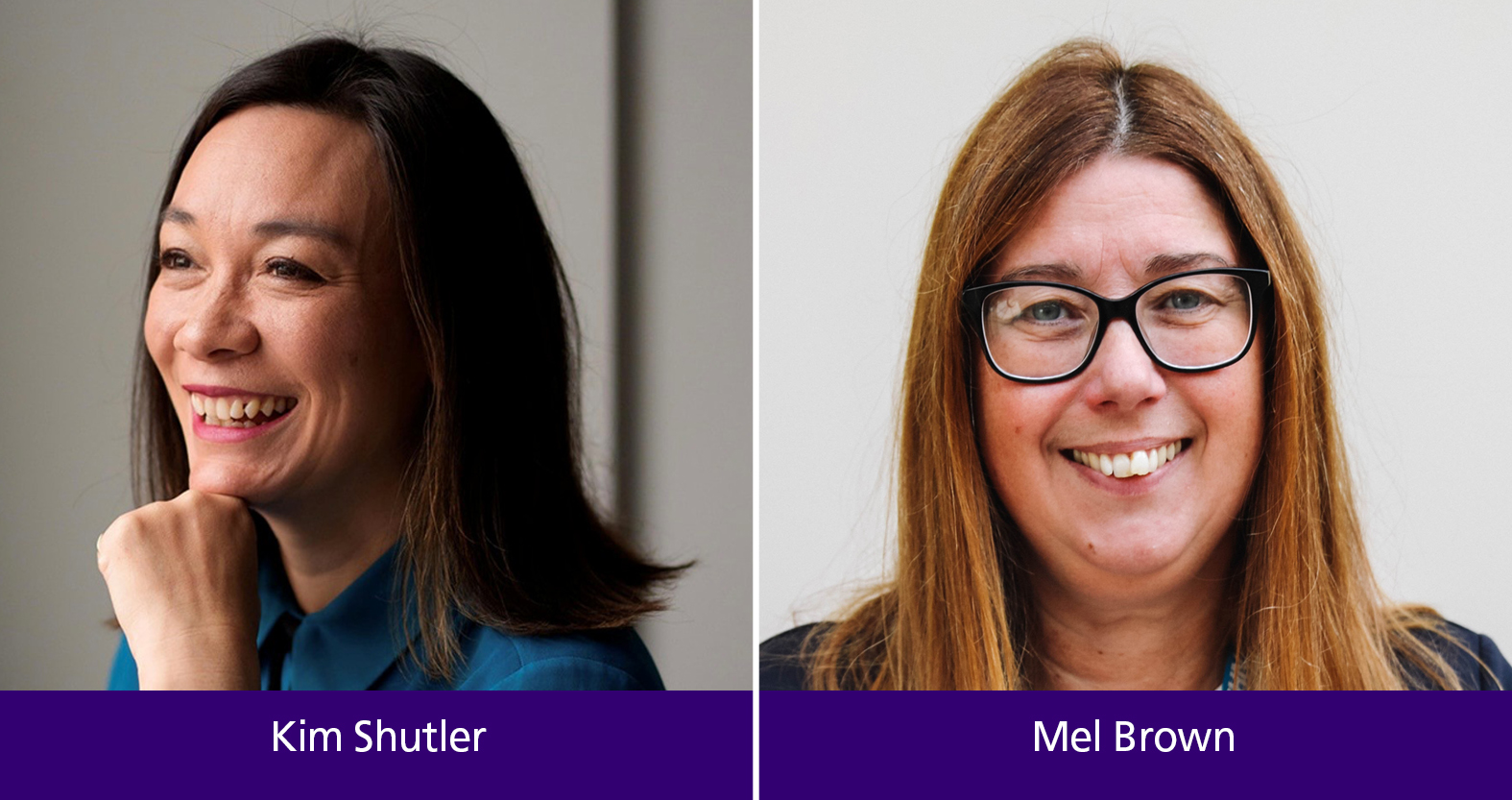
- a welcome from Kim Shutler and Mel Brown, Joint Senior Responsible Officers for West Yorkshire Neighbourhood Health, on what Neighbourhood Health means for our system and why this is so important
- highlights from a visit by national NHS leaders
- an introduction to the new Neighbourhood Health learning space on Futures.
- an update on how Neighbourhood Health teams are developing across West Yorkshire
- practical examples of neighbourhood working in action across our places
- information about the new co-produced framework for involvement across West Yorkshire, supporting teams to put people and communities at the heart of planning, design and delivery
- a round-up of recent case studies, training opportunities and useful links to help partners stay connected, share learning and get involved
Neighbourhood Health in West Yorkshire: building on what we know works
By Kim Shutler and Mel Brown, Senior Responsible Officer, West Yorkshire Neighbourhood Health
Hello
We are Kim and Mel
Across West Yorkshire, partners are coming together around a shared ambition: to shape health and care around neighbourhoods, putting people and communities at the centre of how things work.
This isn’t a new idea. For years, many of you have been working in neighbourhood-based ways – building relationships, joining up support and finding practical solutions that make a real difference locally. What feels different now is the opportunity. There is a clear national focus on Neighbourhood Health, backed by policy, strategy and the support needed to make change happen in a meaningful and sustainable way. That creates a real moment for us in West Yorkshire.
Neighbourhood Health is being led by our five places: Bradford District and Craven, Calderdale, Kirklees, Leeds and Wakefield District, because that’s where the strongest connections sit and where impact is felt most directly. Across those places, the NHS, councils, VCSE organisations and partners such as the West Yorkshire Combined Authority are working together, recognising that the challenges we face and the solutions we need, cut across organisational boundaries.
Nationally, there’s a clear direction of travel in the year ahead: improving access, supporting people earlier and more proactively and creating better alternatives to hospital-based care where possible. Neighbourhood teams are part of how we turn that into reality, helping people work as one team around neighbourhoods rather than as separate services.
Importantly, this isn't just about future plans. Across West Yorkshire, neighbourhood approaches are already making a difference.
In Bradford District and Craven, partners have introduced a digital tool to help identify people who may be at greater risk of falling. The approach was first tested in one neighbourhood and has now been expanded more widely, helping teams offer support earlier to those who need it most. By preventing falls and supporting people to stay independent, services can help people remain healthier and more confident in their own homes.
In Wakefield District, six neighbourhood teams are bringing together health, care and community services to support people with more complex needs. Early results are encouraging, with a 24.2% reduction in A&E attendances among people supported through multidisciplinary teams. Across the district, there has also been a 3.1% reduction in emergency hospital admissions for people aged over 65, supported by services including virtual wards, urgent community response teams and acute respiratory infection (ARI) hubs.
Elsewhere, partners are seeing the benefits of neighbourhood working in different ways. In Calderdale, five neighbourhood teams are using population health data to identify local priorities and support people living with frailty or approaching the end of life, helping them access more coordinated care closer to home.
In Kirklees, six neighbourhood teams are focusing on frailty and mental health, using shared data to identify people most at risk of needing urgent care. This approach has contributed to a 7.8% reduction in non-elective admissions compared with the previous year. Kirklees is also working closely with local communities, including through innovative outreach with the University of Huddersfield, using pop-up tents, mini-buses and other local settings to hear directly from residents about what matters to them.
Meanwhile, Leeds is building on a long history of neighbourhood working across its 15 neighbourhoods, with a strong focus on prevention, early intervention and proactive support for around 46,000 people with complex needs. Across places, Home First approaches are helping more people recover in their own homes, reducing unnecessary hospital stays and supporting greater independence.
We also know this work is happening at a time of real pressure. Many organisations and teams are dealing with change, uncertainty and competing demands. That context matters. Neighbourhood Health isn’t about adding more on; it’s about working differently, in ways that are more sustainable for staff, make better use of collective strengths - and ultimately lead to better experiences and outcomes for people.
The opportunity now is to build on what already works and take it further, moving from great local practice in pockets to a more consistent, shared approach across West Yorkshire. Done well, this will support staff to focus on what matters, help organisations collaborate with greater trust and clarity and make care feel more joined up, human and responsive for the people we serve.
This isn’t something being designed behind closed doors or delivered by one part of the system alone. Neighbourhood Health will only succeed if it’s shaped by those delivering it and by communities themselves. Whether you work in health or care, the VCSE sector, local government, or alongside communities in other ways, you have a role to play.
We see this as a genuine invitation: to get involved, share learning, test new ways of working and help shape what Neighbourhood Health becomes in West Yorkshire. The early results we are seeing across our places show what is possible when organisations work together around the needs of local people. This is an important moment and, together, we can build on what we know works to create lasting improvements for communities across West Yorkshire.
Thanks for reading
Kim and Mel
National leaders see Neighbourhood Health in action across West Yorkshire
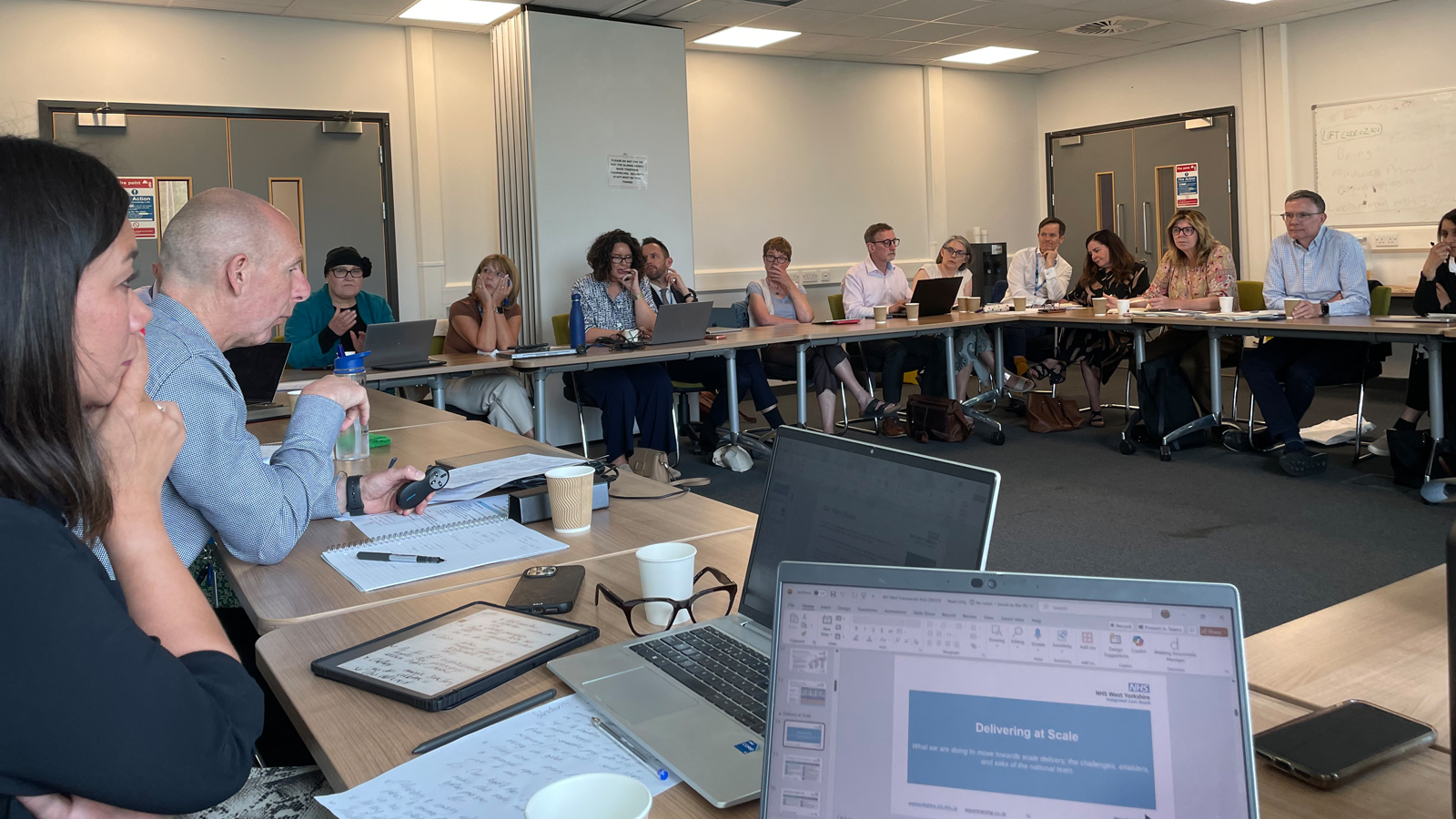
West Yorkshire’s Neighbourhood Health work was in the spotlight when senior NHS leaders visited the region to hear how partners are working together across local communities.
The visit took place at the Reginald Centre in Chapeltown, Leeds, a community hub that brings together local services including a one-stop centre, job shop and library. Around 30 representatives from the NHS, local government, VCSE sector, primary care, mental health services, the ambulance service and place provider partnerships joined the session, which focused on the West Yorkshire Neighbourhood Health framework.
The event was chaired by Interim CEO Jonathan Webb and welcomed Professor Claire Fuller, National Priority Programme Director for Neighbourhood Health and Dr James Kent, National Adviser in NHS England’s Strategy Directorate. Partners used the visit to show how Bradford District and Craven, Calderdale, Kirklees, Leeds and Wakefield District are delivering Neighbourhood Health at scale, while also sharing learning that could help inform national thinking.
Throughout the day, partners shared practical examples of neighbourhood working. Bradford District and Craven highlighted a digital falls risk tool that helps teams identify people who may need earlier support. Wakefield District shared early results from six neighbourhood teams, where multidisciplinary working has helped reduce GP appointments and A&E attendances among people receiving targeted support.
Calderdale outlined work to develop five integrated neighbourhood teams, using population health data to focus on priorities including frailty and end-of-life care.
Kirklees shared evidence of reduced emergency admissions and continued investment in Home First services, which help people recover safely at home. Leeds highlighted its long-standing neighbourhood approach across 15 neighbourhoods, with a focus on prevention, early intervention and proactive care for people with complex needs.
Mel Brown, Joint Senior Responsible Officer for Neighbourhood Health, said the visit showed that neighbourhood health in West Yorkshire is “not a future aspiration” but already happening across all five places. Kim Shutler, Joint Senior Responsible Officer for Neighbourhood Health, said strong relationships across West Yorkshire remain one of the system’s biggest strengths.
The visit also gave partners chance to discuss what further national support could help accelerate progress, including investment in data and digital infrastructure, support for Neighbourhood Health centres and greater flexibility to develop integrated models of care through place provider partnerships.
New learning space supports Neighbourhood Health collaboration
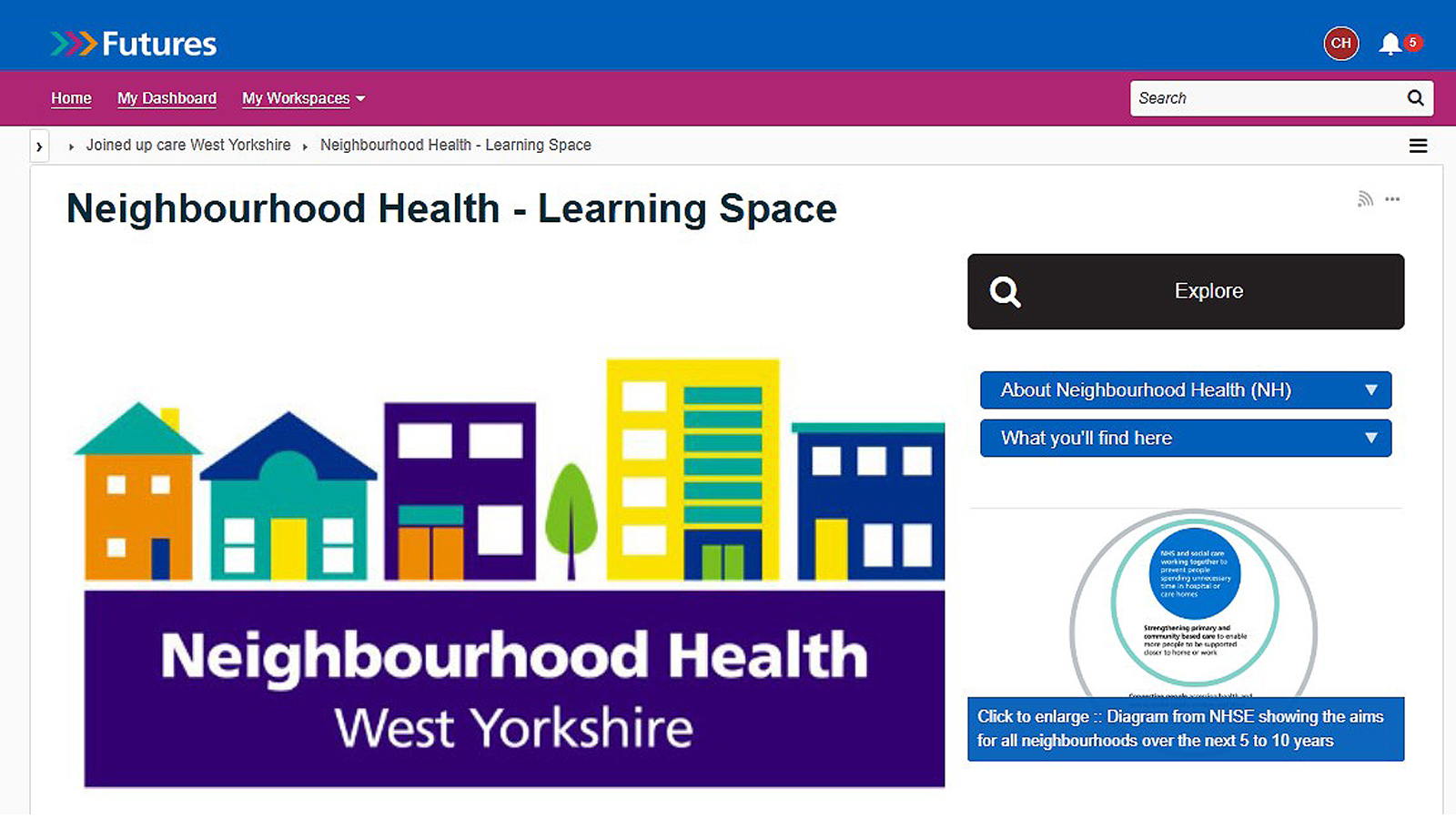
A new Neighbourhood Health learning space has been created on Futures to support shared learning, collaboration and development across West Yorkshire.
The space is for colleagues working in NHS organisations, local councils, community services and the VCSE sector who are helping to shape and deliver more joined-up, person-centred and preventative neighbourhood-based care. It gives partners a shared place to learn from each other, access practical resources and contribute to the development of Neighbourhood Health across the region.
The learning space will grow over time as a collaborative platform. It will bring together upcoming events and webinars, case studies, practical insights, national and local publications, tools, templates and resources that support local teams. It will also include news and updates about the Neighbourhood Health programme, West Yorkshire Integrated Care Board priorities and national policy changes, as well as discussion spaces where partners can share ideas and ask questions.
The aim is to make it easier for partners to connect, learn and improve together. Whether colleagues want to find a useful tool, see what is working in another place, join a webinar or share their own learning, the space will support a continuous improvement approach across West Yorkshire Neighbourhood Health.
More about Neighbourhood Health teams
Neighbourhood Health teams are central to West Yorkshire’s ambition to deliver more care closer to home, support people earlier and reduce inequalities.
In July 2025, NHS England published Fit for the Future - the 10 year health plan for England. The plan describes three key shifts for health and care:
- hospital to community
- treatment to prevention
- analogue to digital.
Neighbourhood Health teams are a key part of delivering those shifts.
In West Yorkshire, this work also builds on the 2022 Fuller Stocktake report and the West Yorkshire Health and Care Partnership Blueprint for Integrated Neighbourhoods: Creating Healthier Communities. The blueprint sets out how teams of health workers will provide care closer to people’s homes, helping to meet physical, mental and social health needs and reduce inequalities in access and outcomes. These teams are known as Neighbourhood Health teams.
Neighbourhood Health teams will use population health data to identify people who may need support earlier and connect them with the right services. They will work closely with residents and communities, reduce unnecessary referrals and hand-offs, and bring together health, care, VCSE, housing and other local services around people’s needs. The ambition is for people to receive holistic, person-centred support closer to home, with the same standards of care wherever they live in West Yorkshire.
Teams are being developed across Bradford District and Craven, Calderdale, Kirklees, Leeds and Wakefield District, with plans tailored to each place. Delivery is focusing on priority groups including people living with frailty, dementia and those needing end-of-life care. This approach means neighbourhood teams can respond to local need while working within a shared West Yorkshire framework.
The programme will be supported by workforce transformation, organisational development, digital improvements, better use of buildings and facilities, and resource and financial planning. A programme of work supported by funding of approximately £4 million to £4.5 million is helping accelerate progress. This includes funding for technology-enabled service transformation, digital infrastructure, data utilisation, transitional capacity and capability, putting people’s voices at the centre of integrated Neighbourhood Health, and supporting modern general practice.
Success is being measured by reducing preventable unplanned care, increasing early intervention, improving patient and staff experience and addressing health inequalities.
Neighbourhood Health in action
Recent stories showcasing Neighbourhood Health in action include:

Becky and Jo's story
In Bradford District and Craven, Becky and Jo’s story shows how integrated Neighbourhood Health can improve support for people with complex needs. At Five Parks Primary Care Network, the Evolve Team (pictured above) brings together primary care, community services and the voluntary and community sector to co-ordinate care more effectively. The team uses weekly multidisciplinary meetings to share insight, reduce delays and make sure people receive quicker, more responsive support. Read Becky and Jo’s story.
Health and care data
Wakefield District using linked health and care data and machine learning to identify people who may be more likely to need an emergency hospital admission in the next three months. The tool focuses on people with COPD, dementia and those receiving end-of-life care, helping neighbourhood teams prioritise support and manage caseloads more effectively. Read more about how using data is supporting people before they need hospital care.
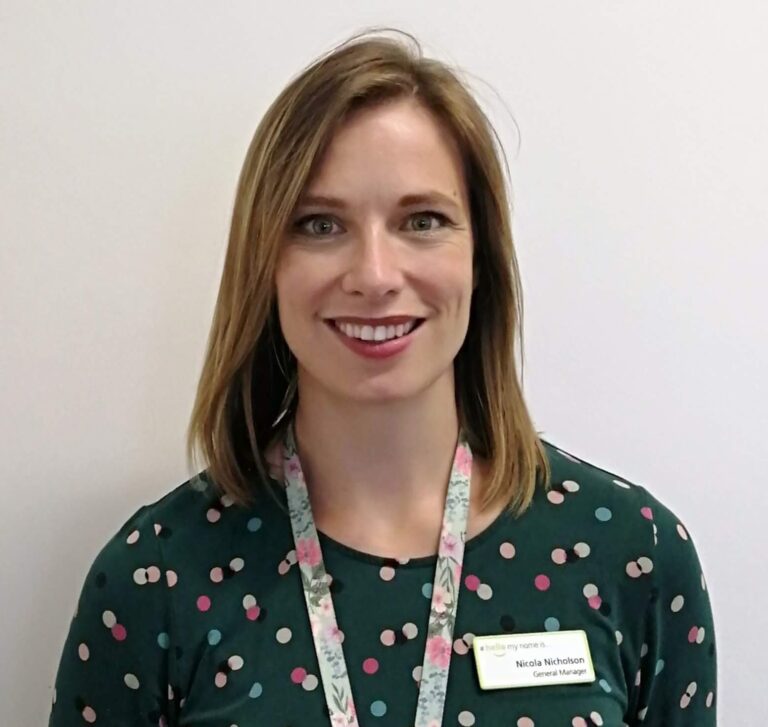
Leeds health pioneer site - Nicola's blog
Leeds sharing early learning from its national Neighbourhood Health pioneer site. The work, led under the umbrella of Neighbourhood Health in Leeds, supports the city’s ambition to reduce health inequalities and deliver integrated, person-centred care in the right place, at the right time. Read the blog from Nicola Nicholson, Associate Director for Strategy and Programmes, and Leeds National Neighbourhood Health Implementation Programme Local Coach (pictured above).
Women’s Health Centre of Excellence
Wakefield is one of only seven places in England and the only one across the North East and Yorkshire, chosen to set up a Women’s Health Centre of Excellence. The centre will bring expert menopause and urogynaecology care closer to home, with group clinics offering specialist advice, education and peer support. See the Conexus delivering innovative health services for the women of Wakefield news pages.
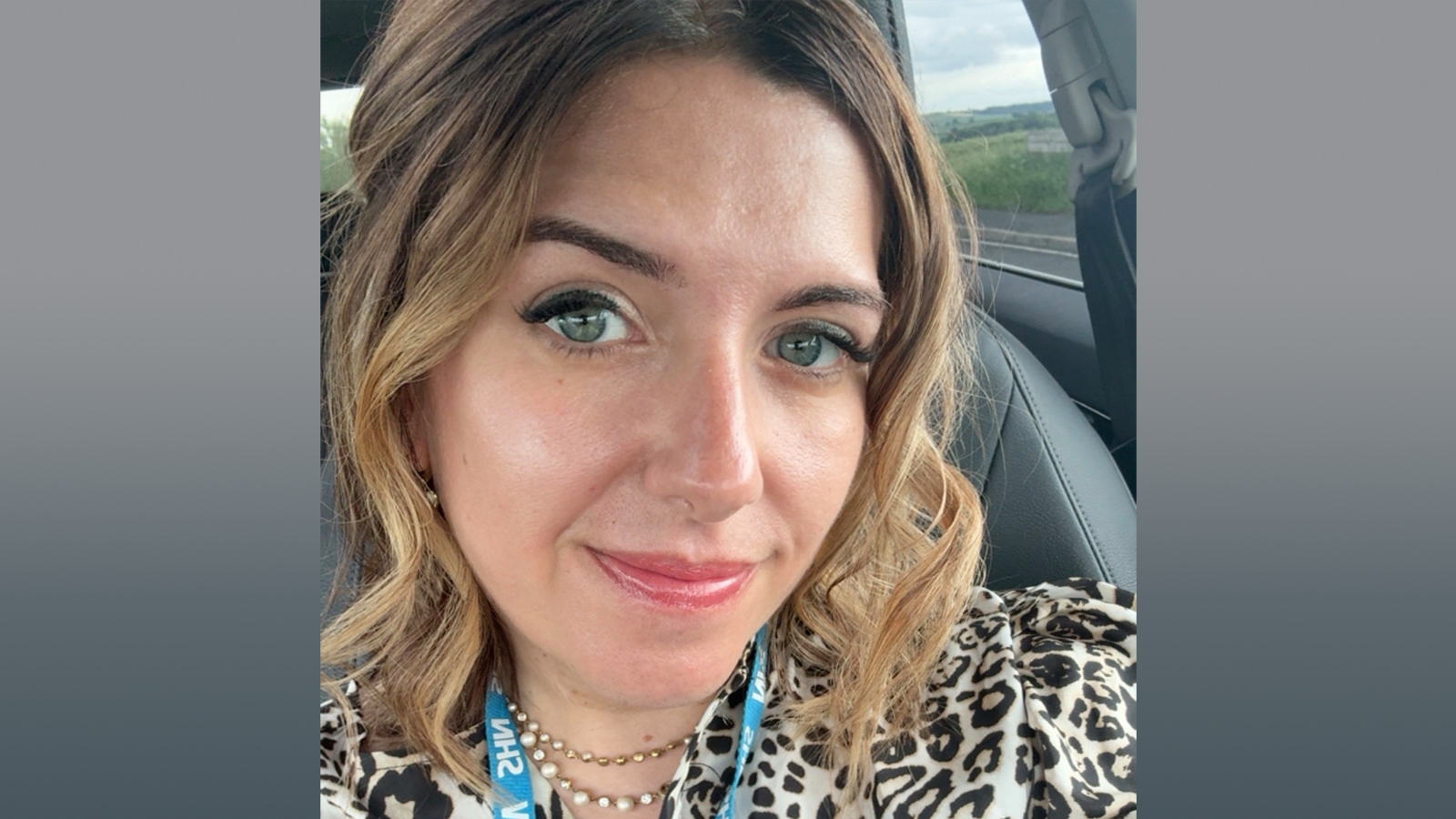
Building bridges - Natalie's blog
A blog from Natalie Knowles (pictured above), Primary Care Partnership and Transformation Lead, NHS West Yorkshire Integrated Care Board (ICB) describing how through Neighbourhood Health models, we are building bridges between the NHS and the spaces where people actually live their lives. Read Natalie’s blog.
Keep it Local
West Yorkshire’s Keep it Local approach supporting closer working with local VCSE organisations and recognising their vital role in prevention, reducing inequalities and supporting communities. The work has helped partners remove barriers, value community expertise and strengthen the foundations for Neighbourhood Health. Read more about how Keep it Local is showing how neighbourhood health is taking shape in West Yorkshire.
Evidence into action webinar series
The NIHR Applied Research Collaboration Yorkshire and Humber is running a new ‘evidence into action’ webinar series focused on Neighbourhood Health models of care for high-priority cohorts.
The free online series has been designed to support ICB and place colleagues as we deliver Neighbourhood Health plans and prepare for the forthcoming Modern Service Frameworks. Each 90-minute webinar will bring together applied researchers, real-world case examples and facilitated discussion to support evidence-based models of care.
The sessions will cover:
- models of care for people with frailty, including dementia, care home residents and housebound patients: 14 September 2026, 12:30 until 2.
- models of care for children and young people: 23 September 2026, 11 until 12:30
- models of care for people with mental health conditions, with a focus on serious mental illness: 9 October 2026, 11 until 12:30
- models of care at the end of life: date and details to be confirmed.
- how data, AI and analytics can support Neighbourhood Health models of care for high-priority cohorts: date and details to be confirmed
The webinars are aimed at ICB commissioners, clinical leads, transformation and planning teams, place-based and neighbourhood leads and partners across primary, community, mental health and social care. They will also be useful for applied health and social care researchers.
Putting people at the heart of Neighbourhood Health

Over the past six months, we have been working with people with lived experience, VCSE organisations, Healthwatch, providers, commissioners and Neighbourhood Health teams to create a new co-produced framework for involvement across West Yorkshire.
The framework helps Neighbourhood Health teams involve people and communities in meaningful ways, so their experiences and ideas shape decisions, set priorities and improve services. Practical guidance and simple evaluation tools will help teams learn, improve and share good practice. By bringing community insight together with data, Neighbourhood Health teams can better tackle inequalities and design services with local people while supporting national Neighbourhood Health priorities. Learn more about how teams will use the framework across West Yorkshire on our involvement pages.
Useful links and further information
- Neighbourhood Health - West Yorkshire Health and Care Partnership
- Neighbourhood Health learning space
- Fit for the Future – the 10 year health plan for England
- Next steps for integrating primary care: Fuller Stocktake report
- West Yorkshire Health and Care Partnership blueprint for integrated neighbourhoods.
- How West Yorkshire became the first Keep it Local Integrated Care System
- Locality’s Keep it Local Health Commissioning Guide
P.S.
You may have noticed a sneak preview of the new Neighbourhood Health branding throughout this edition. We're developing a distinctive West Yorkshire Neighbourhood Health identity, with each place also having its own local branding. We’ll be presenting the proposals to the ICB Board for approval and - once agreed - we'll share branding guidance and resources to support consistent use across the organisation.