

Posted on: 30 January 2026
 Innovating AHP placements in social care: The IMPPaCT model
Hello, my name is Priya, and I am currently on a secondment with the West Yorkshire Allied Health Professionals (AHP) Faculty. I would like to introduce you to an interesting innovation dedicated to expanding and enhancing practice-based learning for allied health professionals across our region. This initiative is a testament to our collective commitment to workforce transformation and the critical role of high-quality clinical education in shaping the future of AHP services in West Yorkshire.
As an AHP practice learning and development lead and assistant professor of physiotherapy at University of Bradford, I’ve seen first-hand the pressure on traditional placement models. The NHS 10-Year Plan calls for three strategic shifts. To meet these priorities, we needed a model that expands placement capacity, promotes preventative care and prepares students for integrated systems.
As AHPs, we are essential contributors to preventative health and patient/person-centred outcomes across the health and social care sectors. However, the ever-increasing demand for AHPs, as highlighted by the need to increase student numbers, places immense pressure on traditional placement models.
That’s why I developed the innovative model promoting patient/person-centred care in care homes through training/education (IMPPaCT).
IMPPaCT introduces non-traditional, community-based placements in care home settings, often overlooked but rich in learning opportunities. This approach not only increases capacity but also equips students with skills for integrated care systems and preventative health strategies.
What makes IMPPaCT different?
The model is designed to meet the three crucial strategic shifts outlined in the NHS 10-Year Plan.
Hospital to community and integrating preventative care: The model places AHP students in care home settings, shifting the focus of care and learning closer to where people live. It is centred on preventative interventions such as falls prevention and nutrition.
Multi-professional approach: By incorporating different AHP professions to provide advice and collaborate on education, the model equips students to understand the scope of practice for other professions and fosters inter-professional collaboration.
Training and education for care staff. This training is crucial for several reasons:
- Enhances competence and holistic care: It supports care staff retention and helps them develop an understanding of holistic care.
- Mitigates liability and contributes to quality: Enhancing staff competence mitigates liability by ensuring they are well-educated, and it helps in contributing towards the CQC quality assurance targets.
Achieving sustainable placements and AHP visibility
The model’s operational framework helps overcome barriers to sustainable placement development while elevating the profile of AHPs in social care. It integrates the four pillars of practice ensuring students engage in holistic professional development beyond a purely clinical focus. The implementation of peer supervision and long-arm supervision provides robust support while making supervision models more flexible and sustainable for care settings. It also enhances the visibility of AHPs. By having students co-create practical, evidence-based toolkits and lead education sessions for care staff, the model clearly highlights AHPs as vital contributors to preventative health in social care.
The impact so far: 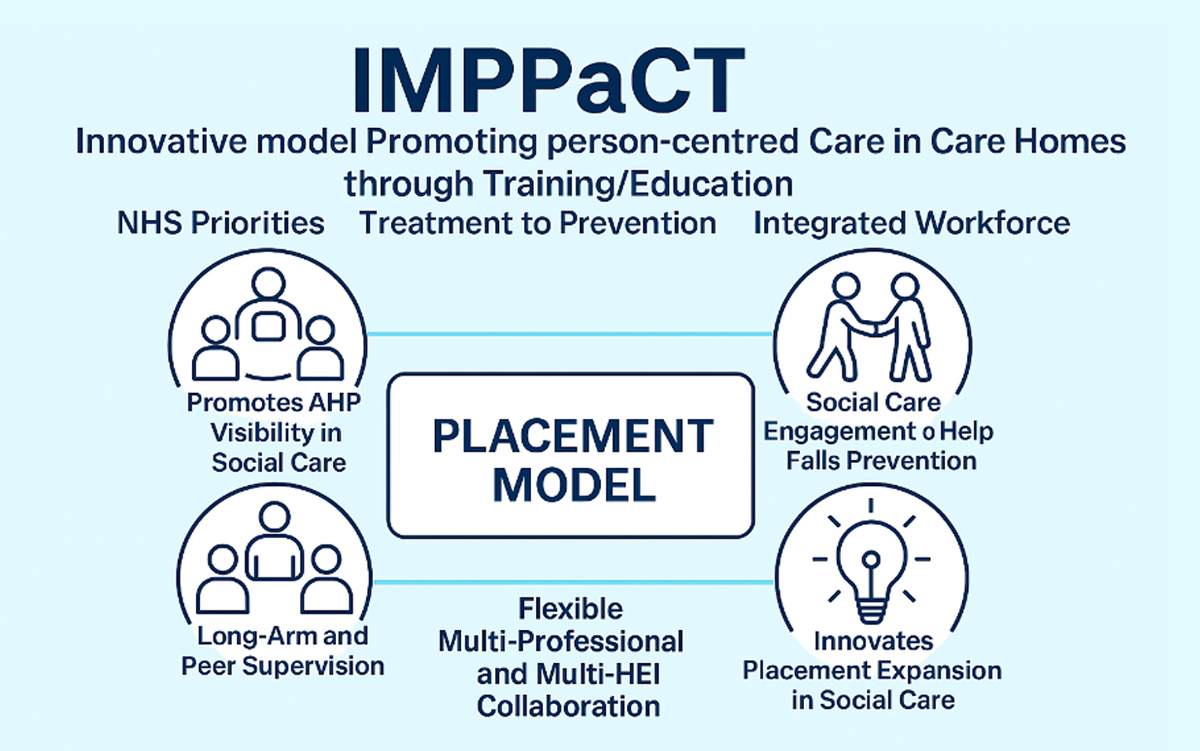
- 1,050+ placement hours delivered
- 30+ care staff trained
- 3 higher education institutions involved
- 100% care staff satisfaction
Feedback from care staff highlights increased confidence in managing falls, while students report improved leadership, education and research skills. These competencies are often hard to develop in traditional clinical settings.
You can find out more about the model and the experiences of students on this placement in this inspirational video.
Thank you for reading.
What else has been happening this week?
Compassionate leadership is helping people stay well at work
A leadership programme in Wakefield is helping health and care staff stay  well at work by changing how people are supported, managed and led. The Compassionate Leadership Programme aims to help leaders create healthier working environments where people can stay well, stay in work and support each other.
The flagship leadership development offer supports our commitment to building a resilient, compassionate and sustainable workforce. It helps organisations respond to shared workforce pressures across health, care and community services. Funded through Healthy Working Life, the programme is open to people in staff-supporting roles across Wakefield, including the NHS, local authority services, social care, primary care and the voluntary, community and social enterprise (VCSE) sector. It is delivered through three days of face-to-face learning with a strong focus on practical behaviour change rather than theory.
The programme was designed and delivered by the Kirklees Health and Care Partnership and endorsed by Professor Michael West MBE. Following proven impact in Kirklees and Calderdale, Wakefield has since commissioned the programme to support a consistent approach to compassionate leadership across West Yorkshire. Feedback from participants shows clear changes in confidence and leadership practice, with people reporting they feel better equipped to support teams.
The next round starts in February 2026.
Read the full case study on the Healthy Working Life case study pages.
Yorkshire Women’s Forum CIC supports South Asian women in Bradford to move towards work
Yorkshire Women’s Forum CIC is working with South Asian 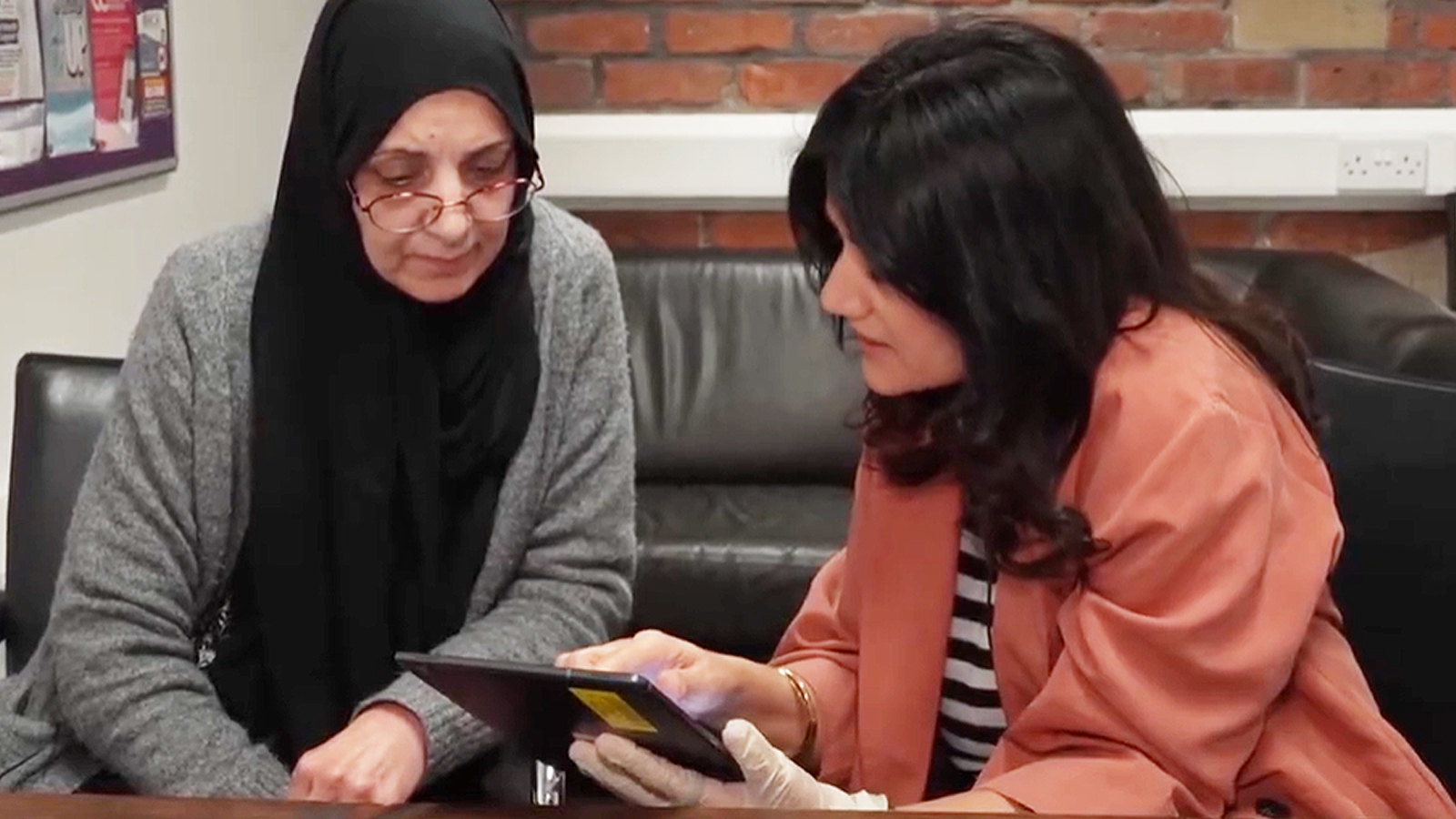 women in Bradford through an eight-week wellbeing and work-readiness programme called WorkRight.
The programme supports women who are not currently in work because of health issues, caring responsibilities or major life changes. It runs as part of Healthy Working Life which is a joint programme of the West Yorkshire Combined Authority and NHS West Yorkshire Integrated Care Board (ICB).
WorkRight focuses on health and wellbeing as a first step towards work. The programme recognises that many women need to improve their health and confidence before they can think about employment, training or volunteering. They look at physical health, mental and emotional wellbeing, sleep, nutrition and physical activity - and understand how these areas connect. Women then identify small, realistic changes they can make to improve their wellbeing and prepare for work in a way that suits them.
Yorkshire Women’s Forum CIC also secured access to PocDoc testing through the ICB, as part of a cardiovascular disease health inequalities project. PocDoc is an app-based test that gives quick results on cholesterol, body mass index, heart age and 10-year risk of heart attack or stroke. See the website news pages for more information.
Airedale NHS Foundation Trust is recruiting new members
Airedale NHS Foundation Trust is encouraging people to join as a member at a very important time as the trust’s plans are well underway for the new hospital.
If you have an interest in healthcare in your area and would like to find out more about the work of your local hospital, becoming a member of the Airedale NHS Foundation Trust could be ideal for you.
Membership is free and is open to everyone aged 14 or above, living in the community that the Trust serves.