Back to the learning disabilities landing page
For professionals
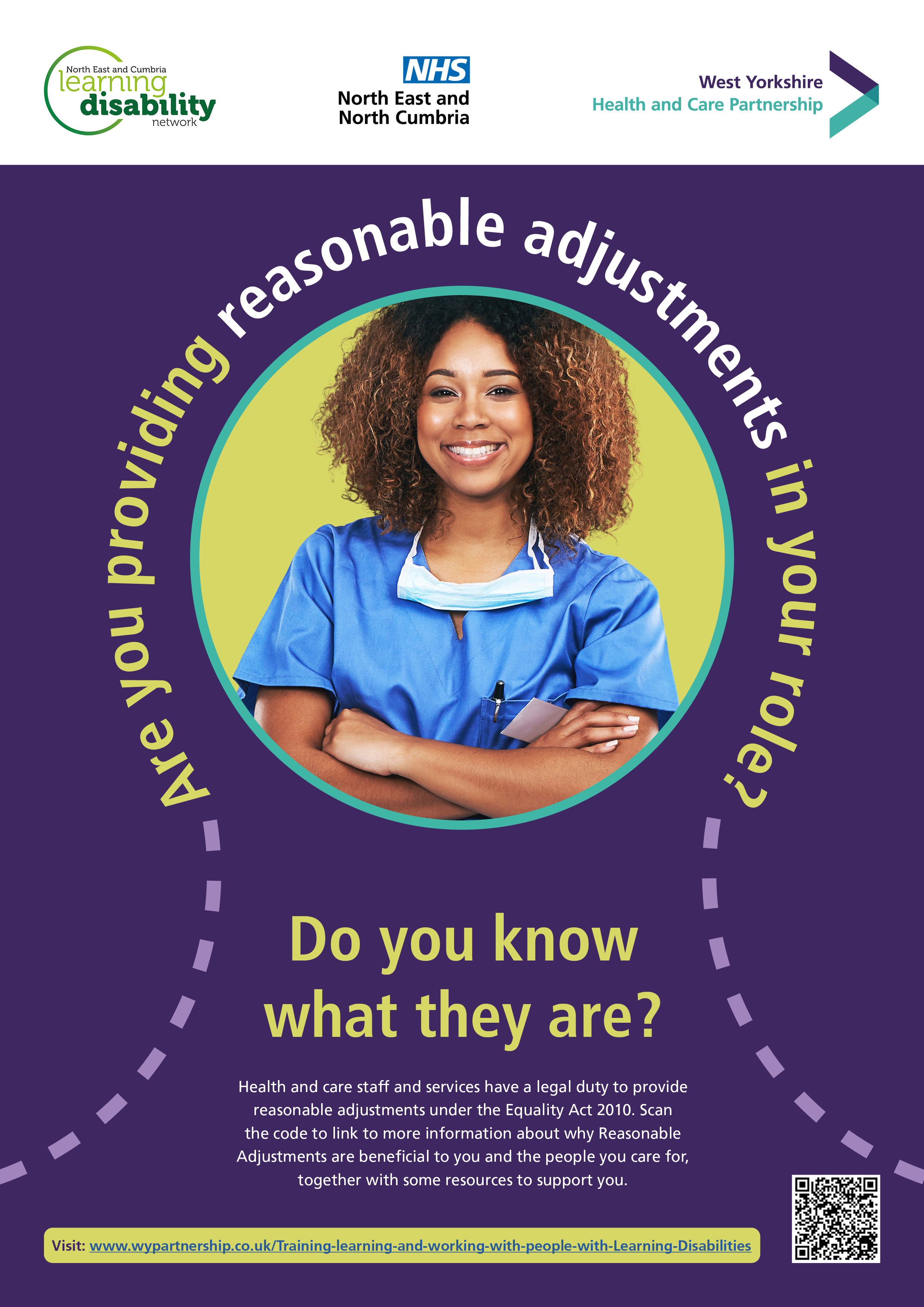
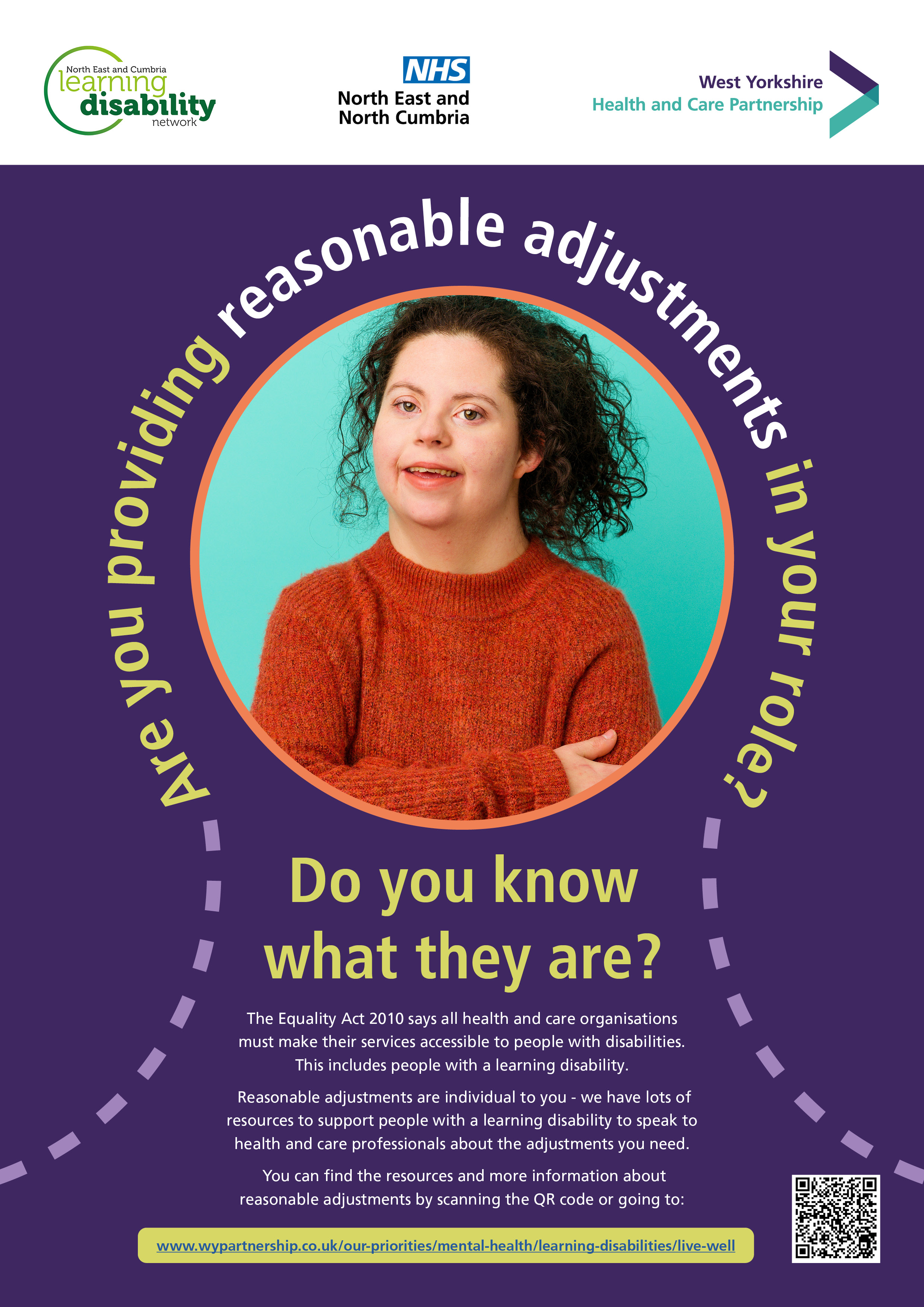
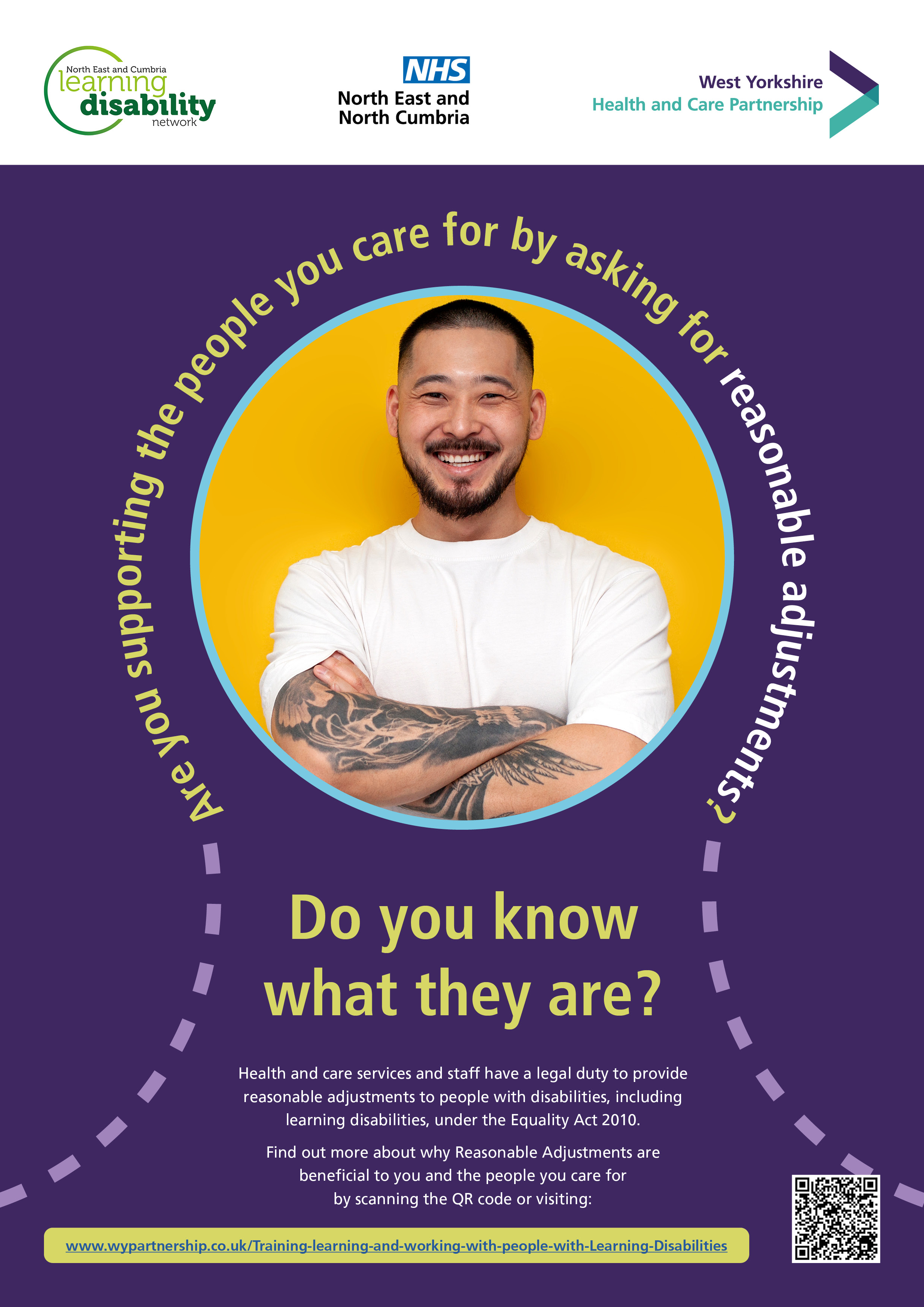
Reasonable adjustments are a legal requirement to make sure health services are accessible to all disabled people (Equality Act 2010). This includes people with a physical disability, sensory disability, learning disability or a long-term condition such as dementia.
The development of the Reasonable Adjustment Digital Flag on the NHS spine holds huge potential for improving health outcomes for people with learning disabilities and autism, and potentially saving lives.
Reasonable Adjustments are things like:
- making sure there is wheelchair access
- providing easy read appointment letters
- giving someone a priority appointment if they find it difficult waiting in their GP surgery or hospital
- booking longer appointments if someone needs more time to understand the information they are given
- changes that require significant planning across the health and care team to enable access to an appointment.
It is important to listen to people, families and carers about what reasonable adjustments people might need.
Identifying the need, providing the reasonable adjustment in a timely and effective manner, documenting and sharing it, can lead to improvements in the individual’s health and wellbeing and also to:
- build relationships with people and the families you care for
- improve experiences of people accessing health & care
- improve DNA rates
- improve experience of health and care professionals.
All staff have a role to play in ensuring reasonable adjustments are identified, documented and provided.
You can use these resources created by partners across West Yorkshire Health and Care Partnership to help you:
Use this training programme Caring for People with Learning Disabilities elearning to find out about reasonable adjustments, annual health checks and more.
You can find more useful resources on our Start Well, Live Well and Age Well pages.
With acknowledgements to our colleagues at North East and Cumbria Learning Disabilities Network who have shared their assets with us.
For patients
Reasonable Adjustments for people with Learning Disabilities, their families and carers.
Living well means looking after your health before anything goes wrong, as well as seeking help when something doesn’t seem right, illness strikes or you need to go into hospital. The Equality Act 2010 says all health and care organisations must make changes to their services so they can be accessible to people with disabilities, and from 31 March 2024, a new marker has been added to everyone's healthcare record to show what disabilities they have so that Reasonable Adjustments can be made for them. This includes people with a physical disability or a sensory disability, people with a learning disability or autistic people and people with a long term condition such as dementia.
Reasonable adjustments can sometimes be small changes such as:
- Providing information in an easy read format
- Installing a ramp
- Providing a quiet room for people to wait in
- Providing a longer appointment time
Reasonable adjustments can also be quite complicated to arrange and sometimes need lots of planning across health and care teams for people who have complex needs.
Reasonable adjustments are individual and should be tailored to the person.
It’s really important to speak to your health and care professionals and tell them about the reasonable adjustments you or your loved one may need.
We have developed a range of resources to support people with a learning disability and autistic people to help communicate what reasonable adjustments they might need to their health or care professionals. They include:
With acknowledgements to our colleagues at North East and Cumbria Learning Disabilities Network.